
Dating today feels more confusing than ever.(This blog is dedicated to real life psychologycal analysis We try to solve our daily problem through analysis) We live in a world where people crave real connection, yet end up dealing with mixed signals, emotional games, and relationships that look good on the outside but leave the heart exhausted.Some of these problems come from fear, some from immaturity, and some simply from people not knowing how to communicate.
But one thing is clear: if we want healthier relationships, we must stop normalizing toxic patterns. These trends might look small or “modern,” but they silently damage trust, self-worth, and emotional peace.Here are six dating trends that seriously need to end if we want love that feels safe and real.
Ghosting: Disappearing Instead of Being Honest
Ghosting has practically become ingrained in society. People just disappear—cutting conversations, ignoring texts, and acting as though the other person never existed—instead than stating, “I’m not feeling the connection.” It’s simple for the ghoster. It’s a maelstrom of uncertainty for the person left behind: Did I do anything wrong? Was it all a hoax? Why did they remain silent? Ghosting is painful because it provides just silence and no resolution.
Why it’s toxic:
The other person starts to doubt their value as a result. It makes one anxious about partnerships in the future. It teaches people that fleeing is the best way to deal with discomfort.
Breadcrumbing: Keeping Someone Hooked With Small Bits of Attention
One of the most emotionally taxing games is breadcrumbing. It occurs when someone messages you just enough to sustain your optimism but not enough to create a lasting relationship. “We should meet someday,” they say, but “someday” never materializes. They never commit, but they flirt. Instead of a genuine connection, they offer crumbs.
Why it’s toxic:
It keeps you mired in unfulfilled hope. Time and emotional energy are wasted. It makes you question whether you’re interpreting their actions too closely. Breadcrumbing is emotional control, not affection. It’s someone who doesn’t really try to get attention.
Love-Bombing: Too Much, Too Fast, Too Unreal
Love-bombing often feels like a dream at first.Someone arrives like a storm—calling constantly, giving compliments, rushing intimacy, making promises about the future you haven’t even thought about yet.But the truth is, anything that rises too fast usually crashes the same way.Love-bombing is often a tactic used to create fast emotional attachment.
Once they feel they “have you,” the energy suddenly drops. The sweet words disappear. You go from feeling adored to feeling confused and abandoned.
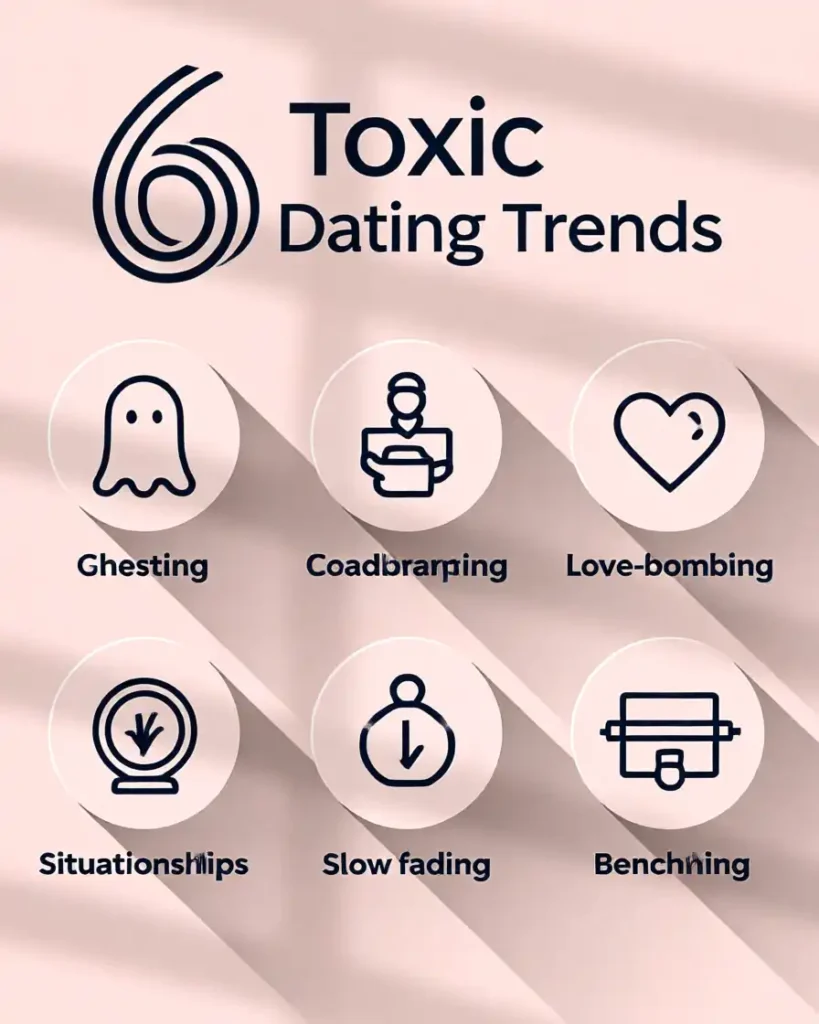
Situationships: When You’re Close but Not “Official”
Situationships, which are less than relationships but more than friends, are the new emotional gray area. The relationship grows stronger and the connection feels genuine, yet the label is never present. “Let’s just go with the flow” is the ambiguous response whenever you seek for clarification. The issue? Heartbreak is typically the result of the “flow.”
Why situationships hurt:
You invest emotionally without any assurance.You don’t know your place in their life.You adjust your needs to avoid appearing “demanding.”The future is always foggy.Situationships might look casual, but emotionally they are heavy. They take energy without giving security.
Slow Fading: Ending a Relationship Without Saying It
Ghosting in slow motion is called slow fading. Rather of abruptly vanishing, people progressively lessen their effort—longer response times, justifications for postponing plans, abrupt detachment, and little affection. They simply sap the relationship till you give up, but they don’t end things.
Why it damages people:
Emotional bewilderment results from it. It gives you the impression that you did something incorrectly. Rather than providing closure, it prolongs suffering. Pretending to be courteous, slow fading is really emotional avoidance.
Benching: Keeping People as Backup Options
Benching happens when someone doesn’t want to commit to you—but doesn’t want to lose you either.So they keep you on standby, like a backup plan.They message you when they’re lonely, give attention when it suits them, and pull back whenever you get close.
Why it’s toxic:
You never feel selected. You don’t feel like a priority, but rather an alternative. To keep them happy, you begin to compromise your principles. Nobody is worthy of occupying someone else’s emotional seat. People are not “substituted” as needed in the game of love.
Final Thought: Breaking the Cycle
These toxic dating patterns don’t just ruin relationships—they weaken our self-esteem, break trust, and create fear around love.But change begins when we stop accepting these behaviours as normal.Healthy relationships need:
honesty,
consistency
clarity
effortemotional
responsib
Love should feel safe, not stressful. Simple, not confusing.You deserve someone who chooses you without hesitation, communicates without fear, and treats your heart with care.And remember: sometimes the biggest act of self-love is walking away from anyone who makes you feel unsure, unseen, or unvalued
1 thought on “6 Toxic Dating Trends We Seriously Need to Stop”